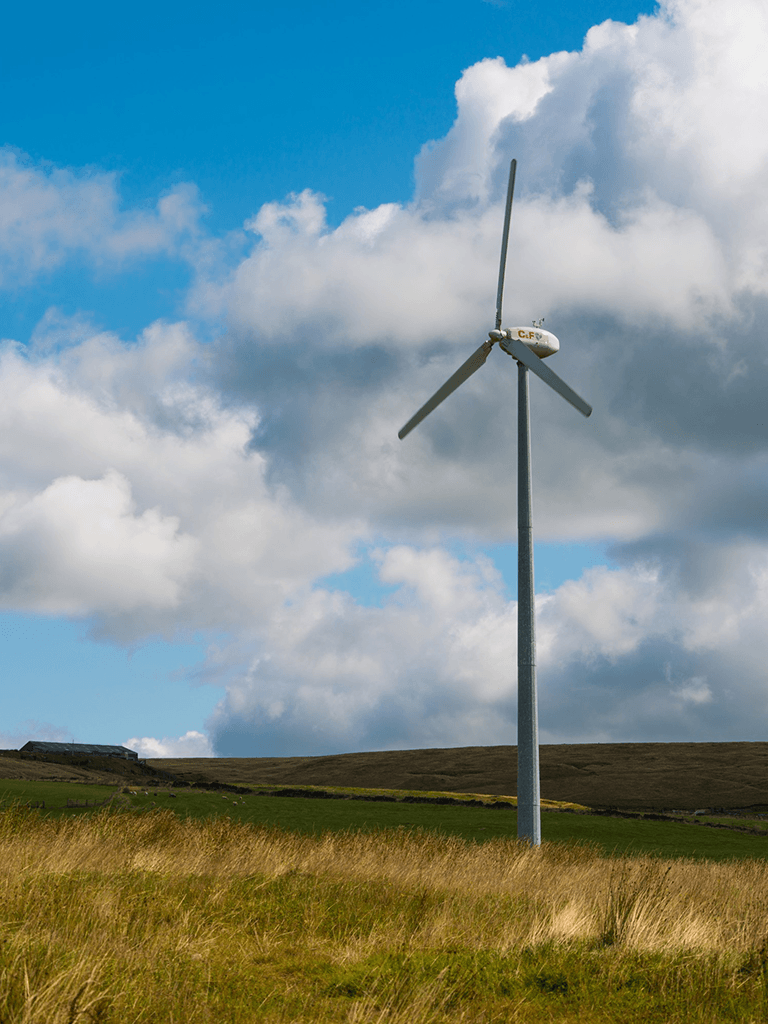
Due to initial limitations with mains energy, The Wellbeing Farm installed a wind turbine to power the site, showcasing its dedication to renewable energy solutions.
But don’t worry we do lots of smaller budget, less time-consuming option too, becasue the important things are
- Lots of little things add up
- Starting small is starting, and that’s good enough.
When Sustainability Starts To Feel Like Another Full-Time Job
Sustainability for small businesses should be getting easier. Instead, for many business owners, it feels more confusing than ever.
Almost every day there seems to be another email announcing a new accreditation, carbon calculator, framework, initiative or environmental standard. One organisation recommends a particular certification. Another suggests a different route entirely. Then somebody else shares a webinar explaining why both approaches are outdated and there is now a better option available.
At some point, even the most enthusiastic business owner starts wondering whether they need a degree in environmental science simply to understand the terminology.
Recently, I came across a periodic table of sustainability initiatives. An actual periodic table. Whilst part of me admired the effort that had gone into creating it, another part thought it perfectly illustrated the problem facing businesses today. If sustainability experts need a giant chart to explain all the available options, what chance does the average business owner have when they are already juggling customers, staffing, finances and a hundred other priorities?
It is hardly surprising that some businesses respond by sticking their heads in the sand. Not because they do not care. Not because they are unwilling to change. Simply because the sheer volume of information feels overwhelming.
The irony is that most business owners genuinely want to do the right thing. They understand that climate change matters. Want to reduce waste. They want to make better decisions. They want their businesses to have a positive impact on the world around them.
What they do not want is another complicated process demanding time they simply do not have.
Why So Many Businesses Get Stuck Before They Even Begin
One of the biggest challenges with sustainability is that it often appears far more complicated than it actually needs to be.
Business owners start researching and quickly disappear down a rabbit hole of carbon reporting, supply chain analysis, environmental audits, impact assessments and certification schemes. Before long, they have spent weeks reading about sustainability without actually doing anything sustainable.
Perfection becomes the enemy of progress.
Many people convince themselves they need the perfect plan before taking the first step. They believe they must fully understand every accreditation before choosing one. They assume they need substantial budgets before making meaningful changes. Some even worry that unless they can do everything properly, there is little point doing anything at all.
That mindset holds businesses back more than any lack of resources ever could.
The reality is that every successful sustainability journey starts in exactly the same place. Somebody decides to begin.
They do not have all the answers. Do not possess a perfect strategy. They simply take one practical step forward and build momentum from there.
That may sound obvious, yet it is surprisingly powerful. Once businesses stop viewing sustainability as one enormous challenge and start seeing it as a series of manageable actions, everything feels far more achievable.
The Good News Is You Do Not Need A Huge Budget
There is a common misconception that sustainability is expensive.
Certainly, some environmental projects require significant investment. Installing renewable energy systems or upgrading major infrastructure can involve substantial costs. However, that is not where most small businesses need to start.
In fact, some of the most effective sustainability improvements cost very little.
Understanding your carbon footprint, identifying waste hotspots, engaging employees and reviewing purchasing decisions can often deliver meaningful results without placing additional pressure on budgets. Better still, many sustainability improvements create financial savings alongside environmental benefits.
Reducing energy consumption lowers bills. Cutting waste reduces costs. Reviewing suppliers can improve efficiency. Suddenly sustainability stops feeling like an expense and starts looking like sensible business management.
Fortunately, support for sustainability for small businesses has improved dramatically over recent years. Organisations such as SME Climate Hub, Small Business Britain, Small99 and B Lab UK now provide free or affordable tools designed specifically for businesses that want practical guidance rather than complicated theory.
That accessibility matters because sustainability should not be reserved for organisations with large budgets and dedicated teams.
Small businesses make up the backbone of the UK economy. If the journey towards Net Zero is going to succeed, smaller organisations need pathways that feel realistic, affordable and achievable.
Why Doing Nothing Is No Longer An Option
For all the confusion surrounding sustainability, one thing has become increasingly clear.
Doing nothing is no longer the safest option.
Customers pay more attention to environmental credentials than they did a decade ago. Employees increasingly want to work for businesses that reflect their values. Larger organisations are asking suppliers tougher questions about sustainability commitments. At the same time, government policies continue moving towards greater environmental accountability.
Whether businesses like it or not, sustainability has become part of the commercial landscape.
That does not mean every company needs to become carbon neutral tomorrow. It does not mean every organisation must pursue multiple accreditations immediately. However, it does mean that businesses need to start thinking seriously about their impact and future direction.
The companies thriving over the next decade are unlikely to be those that ignored sustainability until they were forced to act. Instead, they will be the organisations that embraced gradual improvement and used it as an opportunity to strengthen their business.
What often gets overlooked is that sustainability is not just about reducing emissions. It is about resilience. About efficiency. It is about future-proofing a business in a world that is changing rapidly.
Viewed through that lens, sustainability becomes far more than an environmental initiative.
It becomes a business strategy.
Focus On Progress, Not Perfection
Perhaps the most important lesson for any business owner feeling overwhelmed by sustainability is that there is no finish line. That may sound frustrating at first, but it is actually incredibly liberating.
Many businesses approach sustainability as though there will eventually be a moment when they can tick a box and declare the job complete. In reality, sustainability is more like business improvement itself. Customer expectations evolve, technology advances, regulations change and new opportunities emerge. Even organisations that have spent decades working on environmental issues continue learning and adapting.
That is why perfection is such a dangerous goal. It convinces business owners they need a complete roadmap before taking the first step. They spend months researching carbon footprints, accreditations and reporting frameworks when a small practical action today would achieve far more than another six months of planning.
The businesses making the greatest progress are rarely the ones with the biggest budgets or the most impressive sustainability reports. More often, they are the organisations willing to start where they are, use the resources available to them and keep moving forward. They understand that meaningful change happens gradually through hundreds of decisions made over time rather than one dramatic transformation.
There is also something reassuring about recognising that no business is expected to solve climate change on its own. Customers do not expect perfection. Employees do not expect perfection. What people increasingly value is honesty, transparency and genuine effort. They want to see businesses engaging with the challenge rather than pretending it does not exist.
For small businesses in particular, that should feel encouraging rather than intimidating. The goal is not to become an environmental expert overnight. The goal is simply to begin building a business that is a little better tomorrow than it is today. Whether that starts with measuring your carbon footprint, reducing waste, reviewing suppliers or joining a sustainability programme matters far less than making the decision to start.
Because when sustainability for small businesses is viewed through that lens, it becomes far less overwhelming. It stops being a mountain that needs climbing in a single day and becomes what it should have been all along: a series of practical, manageable steps that gradually create meaningful change.